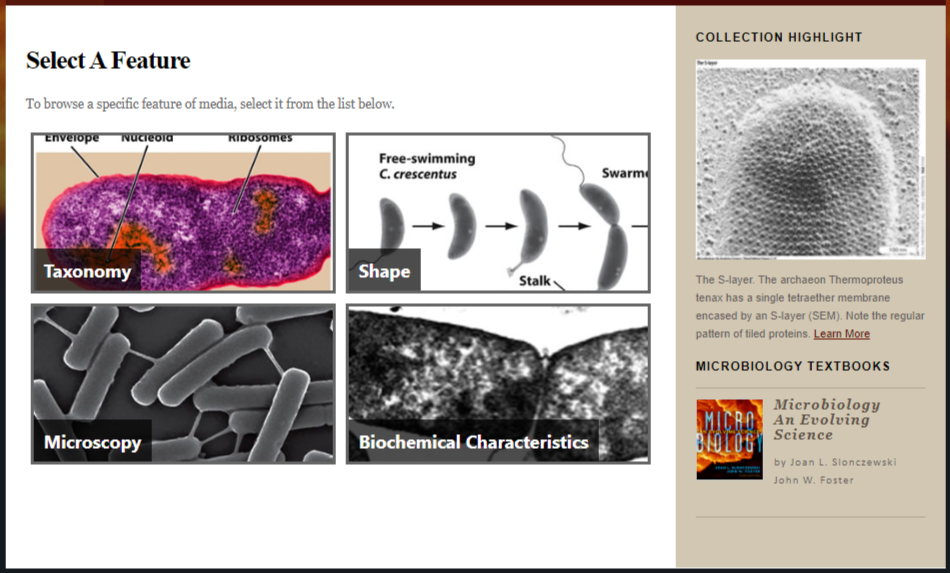
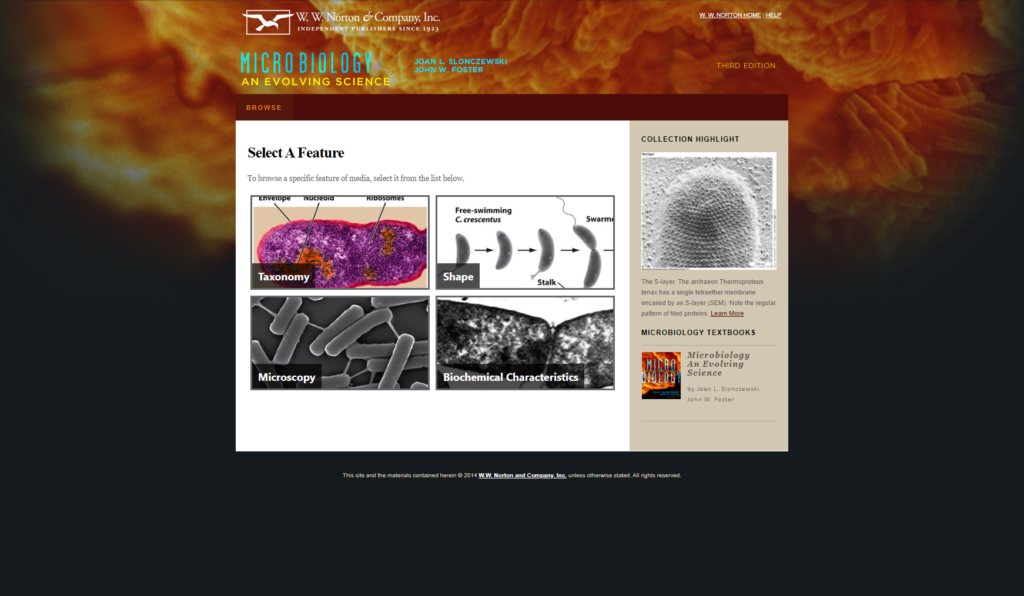
This Microbiology website that I created for W. W. Norton & Co. enables filtering of microorganisms, based on characteristics that are stored in a database. Filtering can be by Taxonomy, Shape, Microscopy, and Biochemical Characteristics.
I received the front-end design from the designers and the data from the editorial assistant for the biology department. The project required data analysis and cleansing, data import from spreadsheets, database design, server-side coding to convert the design into templates, and server administration.
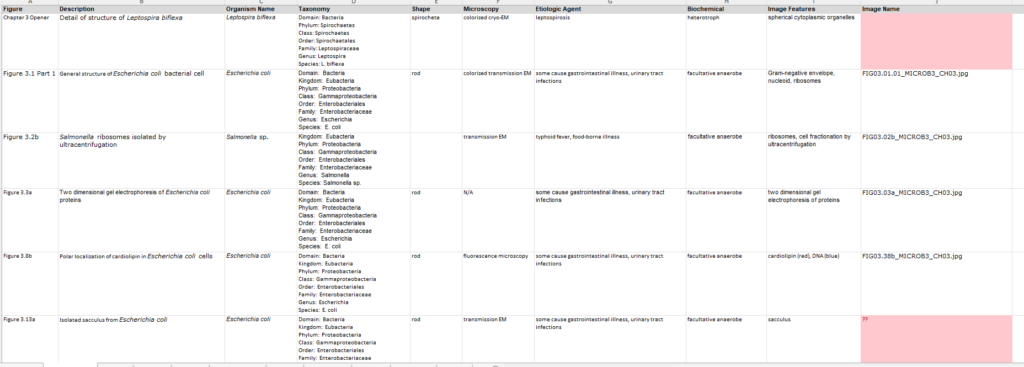
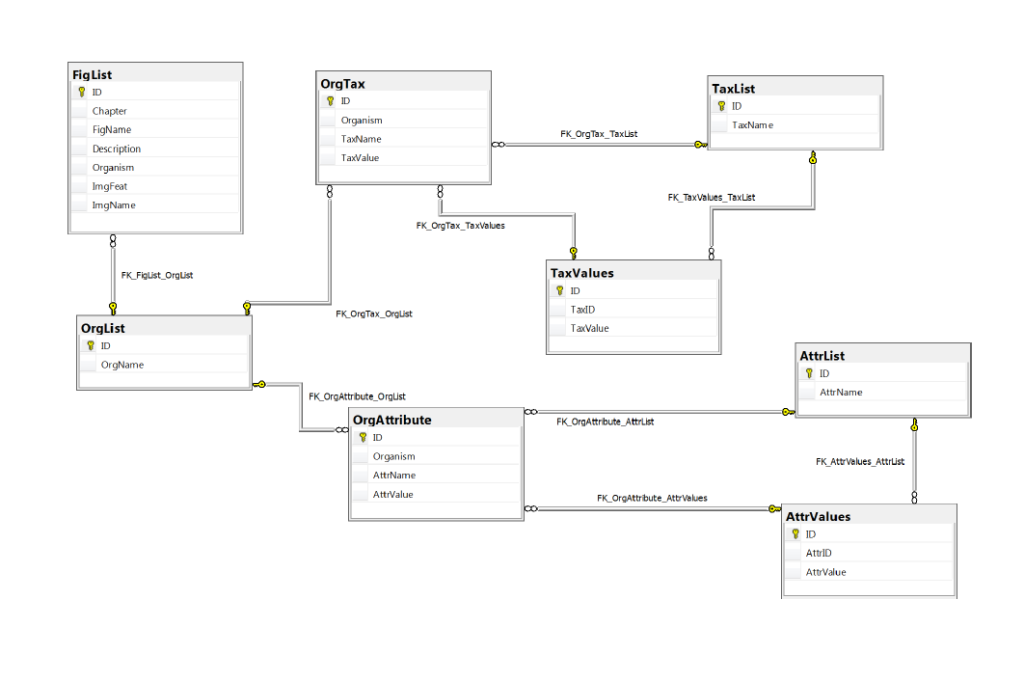
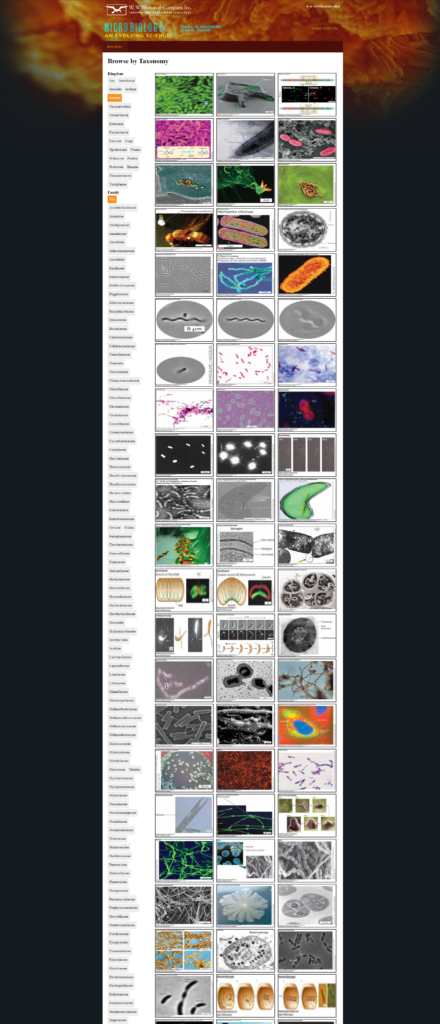
Online database of microorganisms, with filtering by Taxonomy, Shape, Microscopy, and Biochemical Characteristics.Image showing a portion of the spreadsheet with source data. First, the data needed to be cleaned. For example, multiple entries are listed in each cell for the fourth column, “Taxonomy,” and the squares colored pink are missing data (the filename for the organism image was missing).Diagram of the database that contains all the information about the images, organisms, taxonomies to which the organisms belong, and the attributes of each organism. Once I had normalized the data from the spreadsheet into those component pieces, the result was the data structure shown in this diagram.The Taxonomy page, with no filtering selections. The main UX issue with the design is page length. Today I would advocate at minimum for user testing to validate the level of friction caused by scrolling without end, but at the time the designer and stakeholders judged it as acceptable.
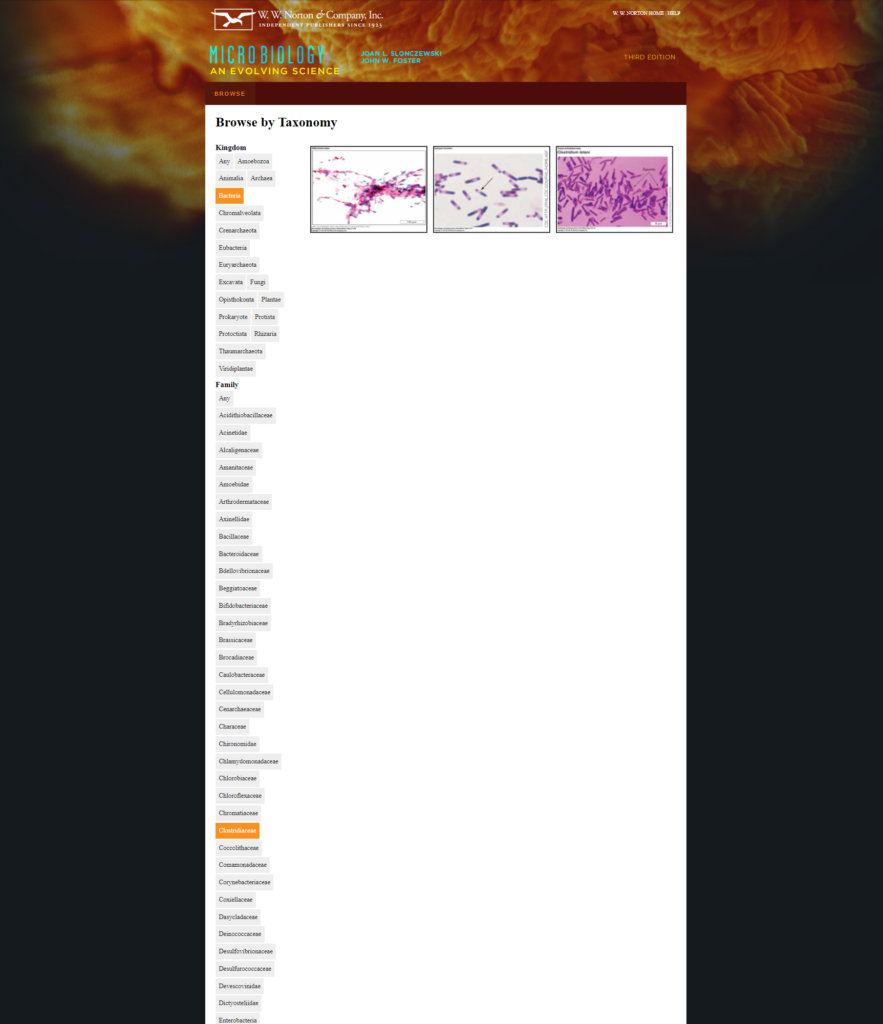
Micrographs Taxonomy with filtering applied. Three organisms match the filtering.
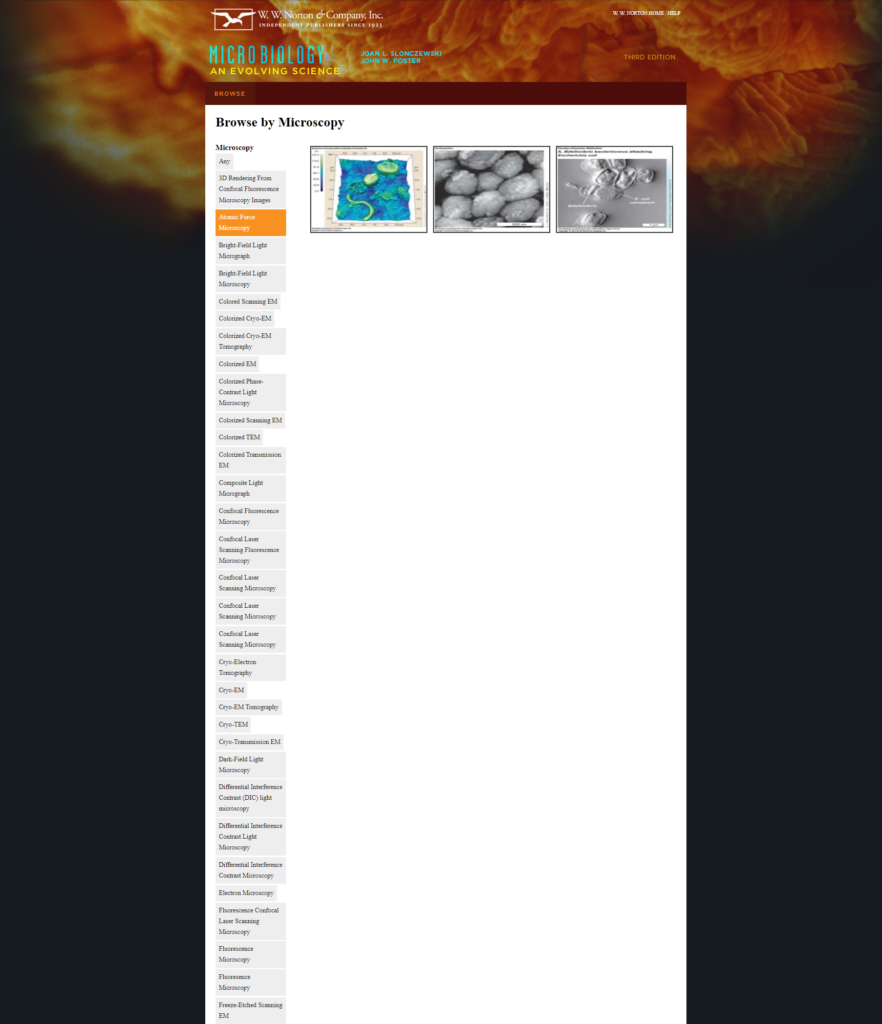
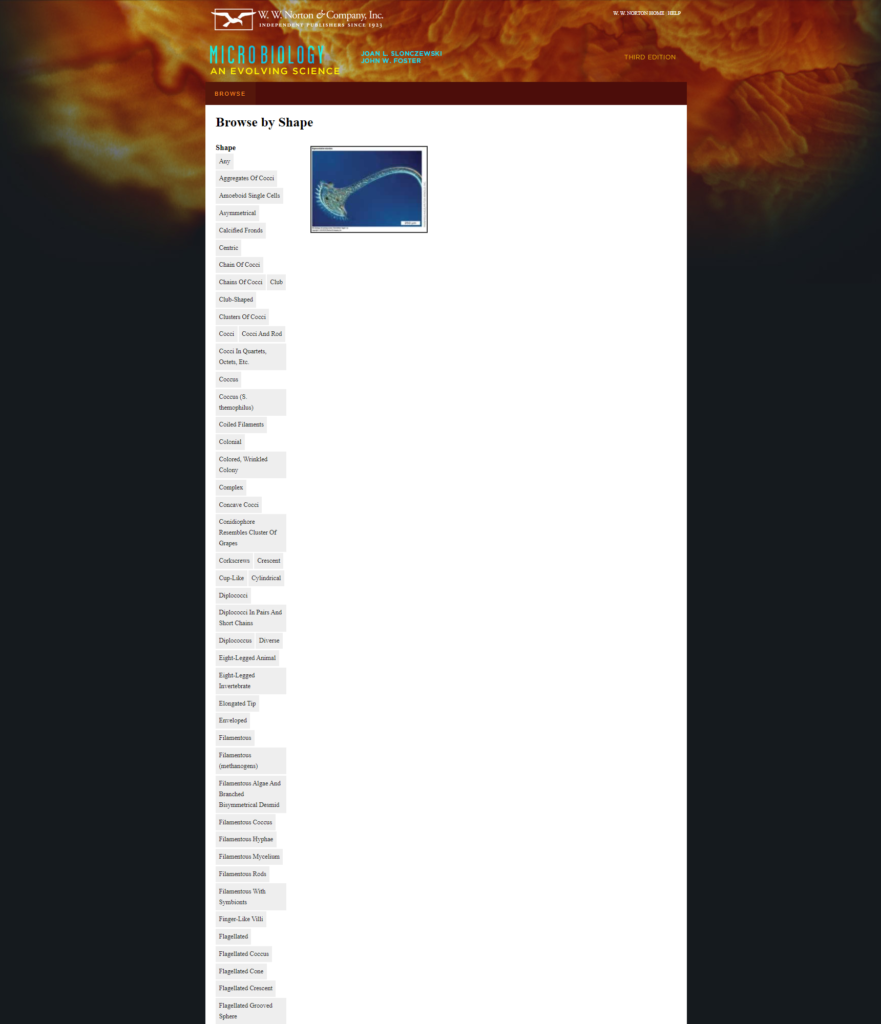
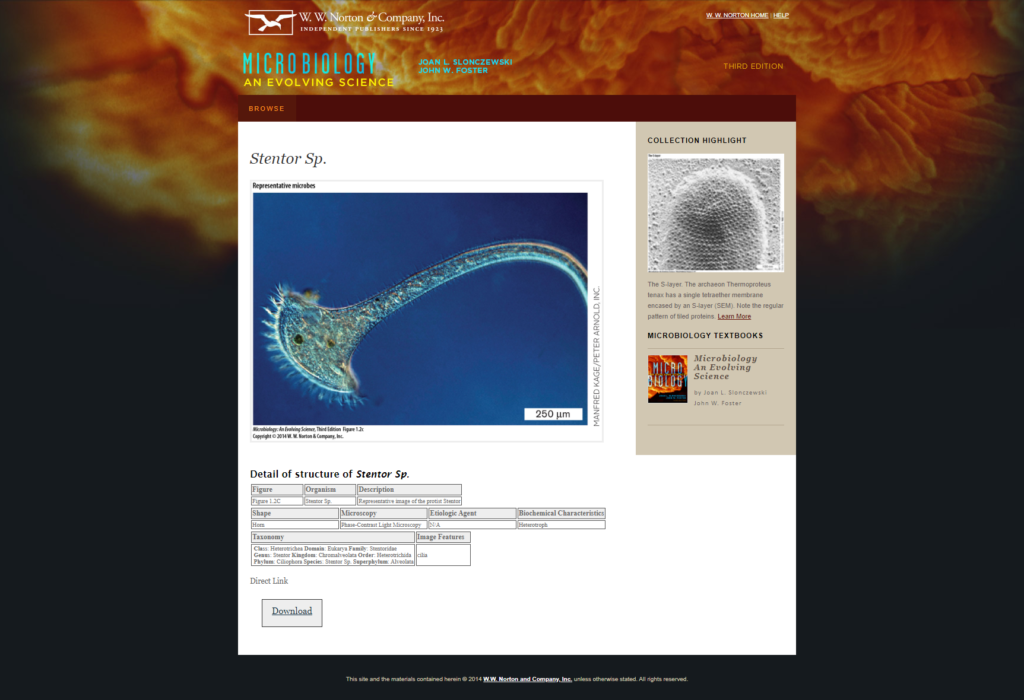
The Microscopy page with filtering, which resulted in three matching organisms.Micrographs filtering based on the shape “Horn.” The filter selection is off-screen.Detail view of the Stentor Sp. microorganism, an organism found by filtering by the shape “Horn.”